There’s a particular kind of pressure that comes with handling a big carp on a hot summer day. The fish is out of the water, the sun is high, the camera needs setting up, and every second matters more than it would on a cooler morning. Getting it right isn’t difficult — but it does require a bit of preparation and the right mindset before the fish is anywhere near the net.
As temperatures rise through the summer months, carp come under extra physiological stress. Warmer water holds less oxygen, fish metabolism increases, and the margin for error when handling a fish out of water shrinks considerably. None of this should put you off summer fishing — some of the best carp fishing on French and European holiday lakes happens in the warmer months. It just means fish welfare needs to be front of mind every time a fish comes ashore.
Here’s a straightforward guide to looking after carp properly in hot weather.
Be prepared before you cast
The biggest factor in how long a fish spends out of the water is how organised you are before it’s even hooked. Have your unhooking mat, weigh sling, scales, and camera all set up and ready to go before you start fishing a swim seriously. Scrambling to find equipment after netting a fish adds unnecessary time to the process — time that matters far more in hot weather than cool.
The golden rule in any conditions, but especially in summer heat, is to keep the fish out of the water for the shortest time possible.
Keep fish wet throughout
This is the single most important habit to build. Thoroughly wet your unhooking mat and sling before the fish ever touches them — a dry mat in direct summer sun can be uncomfortably warm within minutes. Once the fish is on the mat, keep pouring water over it regularly throughout handling. Never leave a fish exposed to direct sunlight, even for what feels like a short period.
If you’re fishing a big carp venue where a 60lb-plus fish might be on the bank, this matters even more. Larger fish take longer to handle, weigh, and photograph properly, which means the wet-mat-and-regular-water routine needs to be followed even more diligently.
Quick photos, not extended photoshoots
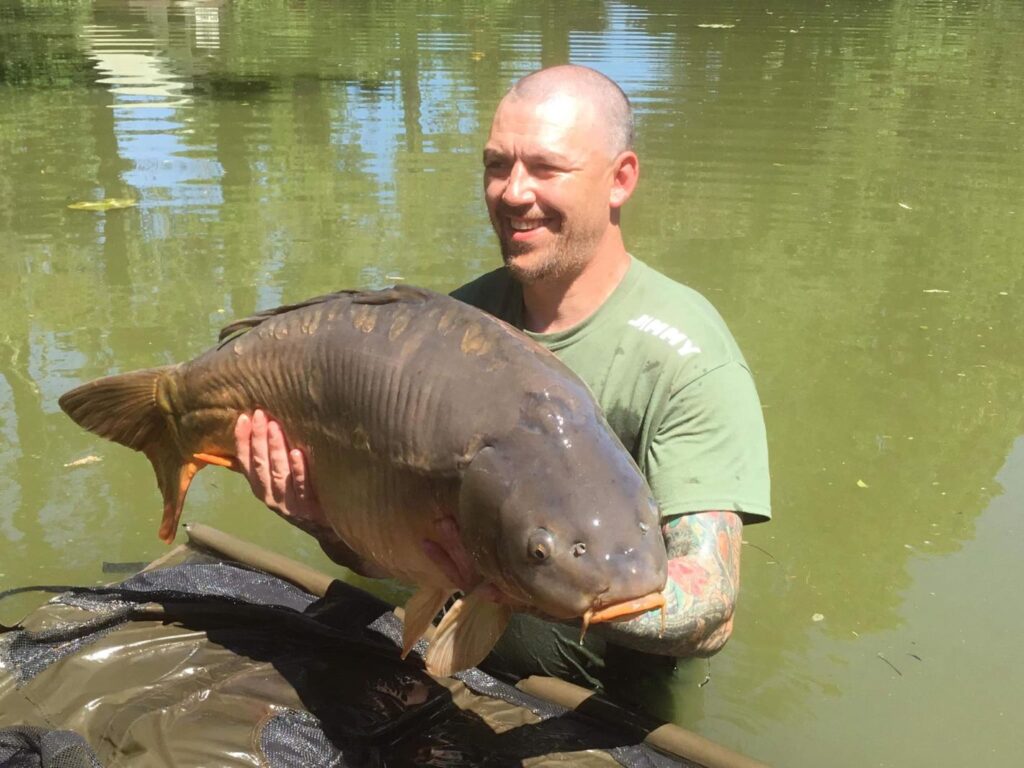
Everyone wants a good photo of a special capture, but the way you go about it matters. Plan your shots before lifting the fish out of the water — know roughly how you want to hold it and where you’re going to stand, rather than working that out with the fish already in your arms. Take a few quick shots rather than dozens, and if the fish shows any signs of stress, return it promptly regardless of whether you’ve got the photo you wanted.
A great catch is only half the story. Getting the fish back safely is what actually matters.
Weigh efficiently
Zero your scales before lifting the fish, and have your weigh sling ready and wet in advance. There’s nothing worse for a fish’s welfare than hanging in a sling while someone fumbles with an unzeroed scale or searches for the right clip. Sort all of this out beforehand so the weighing process takes seconds, not minutes.
Treat hook holds before release
Apply a fish-safe antiseptic treatment to the hook hold and any other damaged areas before the fish goes back. This is a small habit that makes a real difference to a fish’s recovery and long-term health, particularly on venues where the same stock is fished repeatedly throughout a season.
Ensure a safe return
Don’t just slide a fish back into the margins and walk away. Support it upright in the water and allow it to recover fully before it swims off under its own power. If it needs a moment in calmer, shallower water to regain its strength, give it that time. A fish that’s released too early, before it’s properly recovered, is at far greater risk than one given the time it needs.
Extra care during heatwaves
During genuinely hot spells, a few additional precautions are worth following. Avoid extended photo sessions altogether — get the fish back as quickly as possible rather than taking the usual run of shots. Consider concentrating your fishing effort during the cooler parts of the day — early morning and evening sessions are not only more comfortable for you, they’re considerably less stressful for any fish you catch. And always follow any specific guidance or temporary restrictions your venue puts in place during a heatwave — many fishery owners introduce short-term rules during extreme heat specifically to protect their stock, and they’re worth respecting without question.
A simple do and don’t
Do:
- Wet mats, slings, and hands before any fish comes near them
- Be prepared and organised before you start fishing
- Take quick photos
- Keep fish wet at all times during handling
- Treat hook holds
- Support the fish properly on release
Don’t:
- Stand holding a fish while someone else finds the camera
- Leave a fish on a dry mat or in direct sun
- Keep a fish out of the water for multiple separate photo attempts
- Walk around with a fish in a sling
- Ignore any signs of stress
Look after yourself too
Fish welfare isn’t the only consideration in hot weather. Fish during the early morning or evening where possible, make use of any shade available on the bank, and stay properly hydrated throughout the day. A comfortable, well-prepared angler makes better decisions under pressure — including the decision to prioritise the fish over the photo.
Protecting the fisheries we all enjoy
Every carp returned safely is a fish that’s there for the next angler, and the one after that. Whether you’re fishing an exclusive lake hire venue, a big carp destination, or anywhere in between, the standard of care you show every fish has a direct impact on the long-term health of the venue and the quality of fishing available to everyone who fishes there in future.
Take a moment before your next session to refresh your own fish care routine. It costs nothing and makes a genuine difference.
Browse carp fishing holidays on swimbooker Holidays
Whether you’re after a big carp destination, an exclusive lake hire, or checking last minute availability for your next trip, every venue on swimbooker Holidays is instantly bookable online.