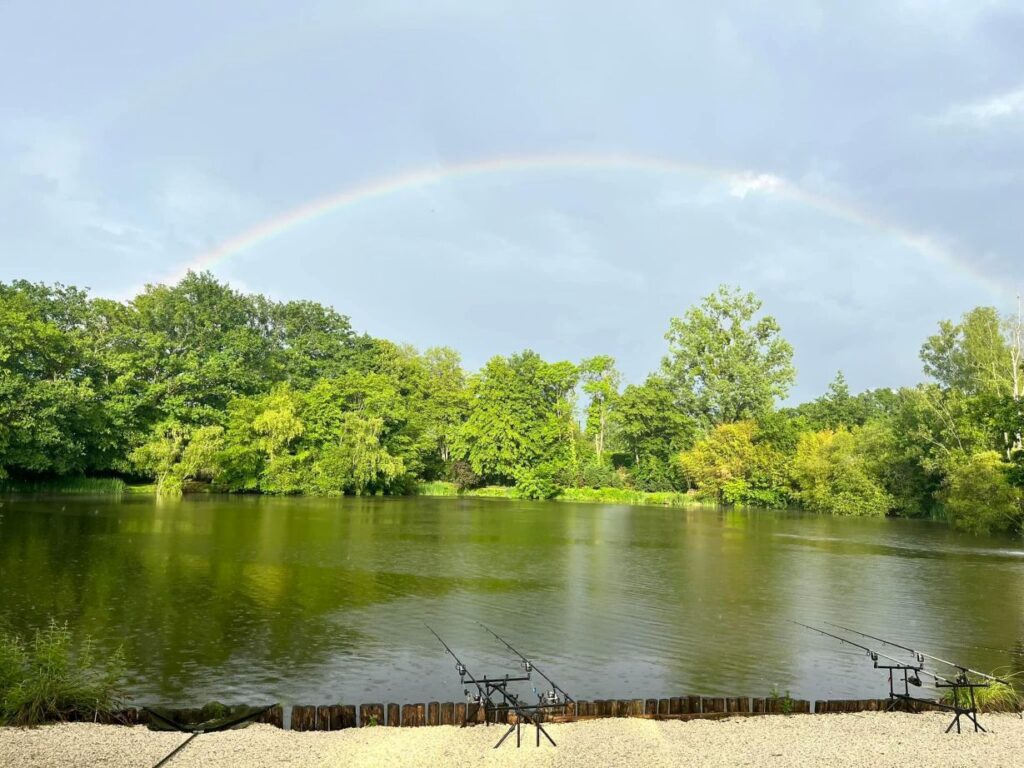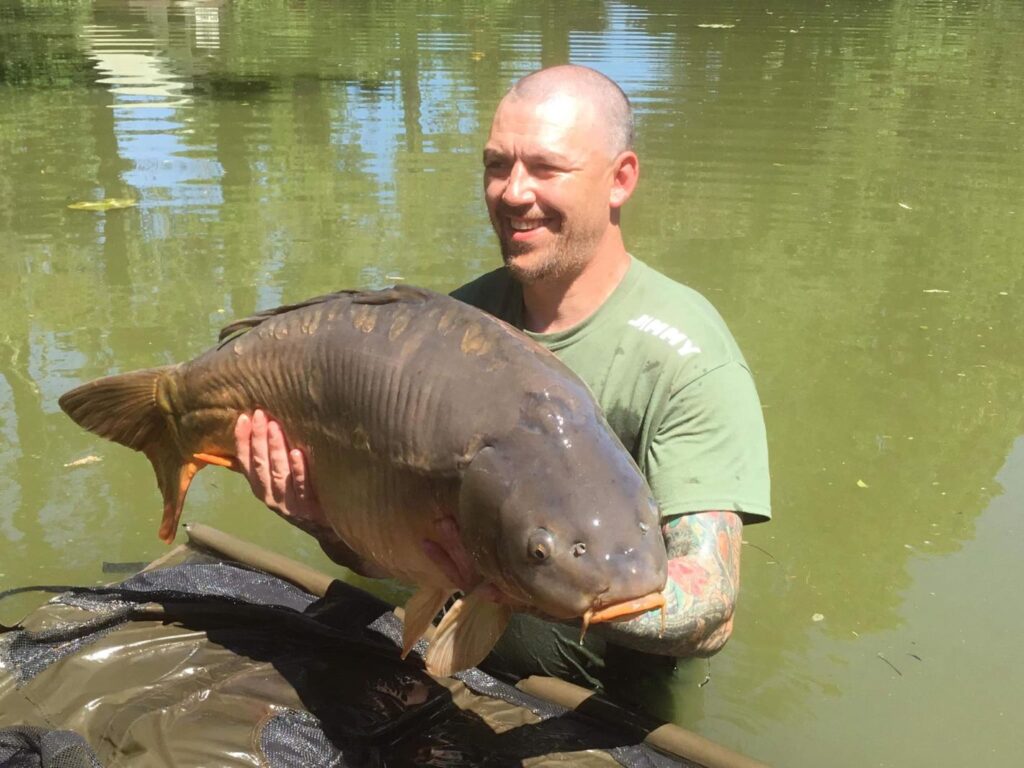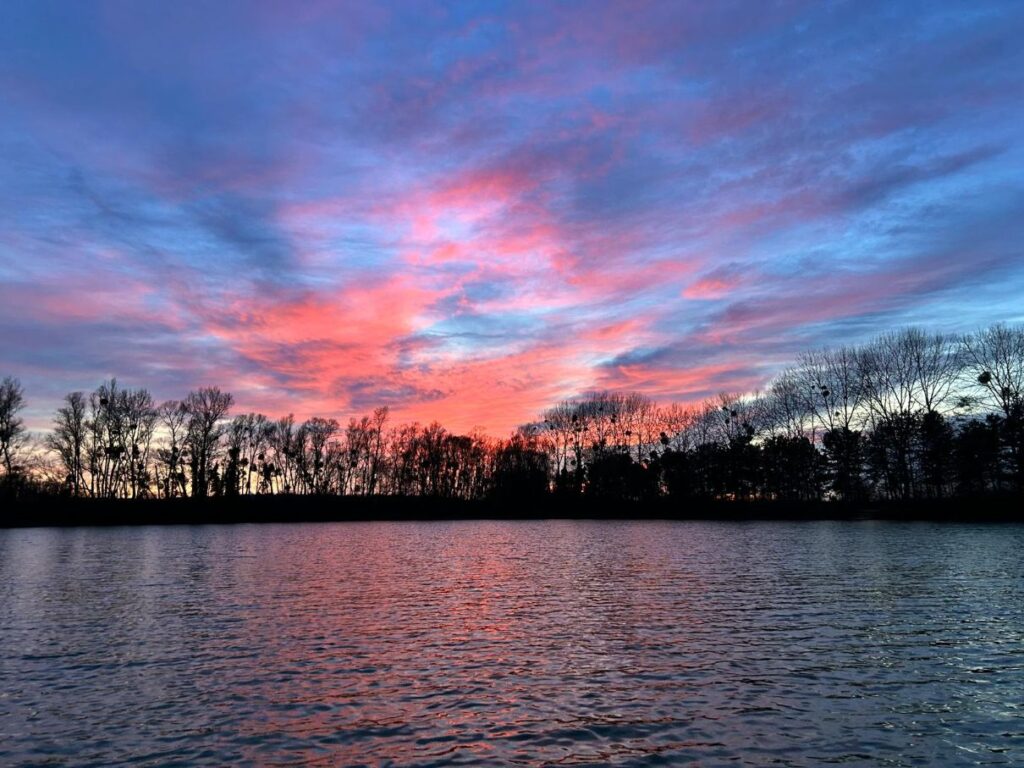
One of the biggest adjustments UK anglers make when fishing a French holiday lake for the first time is the scale of the baiting approach. Waters that are larger, deeper, and less heavily fished than most UK venues respond differently to bait — and the strategy that produces results on a busy day ticket water at home doesn’t always translate directly to a week on an exclusive French lake.
Getting your baiting approach right from the moment you arrive can set the tone for the entire trip. Get it wrong and you can spend days waiting for fish that never quite commit to your swim. Get it right and the lake starts producing within hours.
Start by reading the water
Before a single spod is cast or a single boilie goes in, spend time walking the lake and reading what it tells you. On an exclusive lake hire venue where your group has the water to yourselves, this is one of the great advantages — you can walk every inch of the bank without disturbing anyone else’s session, observe where fish are showing, identify features, and form a picture of where carp are likely to be holding and feeding before you commit to a swim.
Look for signs of fish activity — rolling carp, fizzing bubbles rising from the lake bed, bow waves in the margins, or birds working a particular area. A pair of polarised sunglasses on a calm, bright morning can reveal fish holding in the upper layers of the water that would otherwise be invisible. This information is worth more than any amount of bait introduced blindly onto an uninvestigated spot.
Marker floating before you bait
Once you’ve chosen a swim, resist the temptation to start baiting immediately. Take the time to thoroughly marker float the area you’re planning to fish — mapping the depth changes, identifying hard spots, locating any weed, gravel bars, or features that the lake bed holds beneath the surface.
A hard, clean spot on a lake bed of silt or weed is invariably the right place to introduce bait and present a rig. Fish actively seek out firm areas when feeding on the bottom, and a boilie or particle bait presented on a clean gravel or clay bottom will fish with more confidence and produce more bites than the same bait sitting in soft silt where it can sink out of sight.
Mark your spot accurately with a clip on your reel and a marker on your line — precision matters when you’re spodding to the same area repeatedly, particularly at range on a larger venue.
Spod mix and what to use
The right spod mix for a French lake session depends on the time of year, the venue, and the bait rules that apply. Check your venue’s rules carefully before you pack — some lakes have restrictions on particles, nuts, or certain attractors, and arriving with a bait that isn’t permitted is an entirely avoidable problem.
As a general framework for a summer or early autumn session, a spod mix built around a quality base of pellets, hemp, and your chosen boilie crumb works well on most French venues. Hemp in particular is an outstanding attractor for carp — the oils it releases in warm water create a scent and visual draw that pulls fish into a baited area from considerable distance.
A few principles worth following when building your mix:
- Use a variety of particle sizes to keep fish searching and feeding over the area for longer
- Include a good proportion of your chosen hookbait boilie in the spod mix, so feeding fish encounter the same bait on the hook as in the free offerings
- In summer heat, be cautious with the quantity of particles — a very large volume of fermenting bait in warm water can create an unpleasant environment around your spot rather than an attractive one
- Consider adding a liquid attractor or a glug to the mix — warm water carries dissolved attractors efficiently, and a well-treated spod mix creates a far stronger scent plume than a dry one
How much bait to introduce
This is the question every angler struggles with on a new water, and there is no universal answer. The right quantity depends on the size of the lake, the density of the fish stock, the time of year, and how long you’re planning to fish a swim before moving.
On a week-long exclusive lake hire where your group has the whole water, a moderate, controlled introduction of bait over the first day or two — rather than a heavy carpet introduction on the first cast — tends to produce better results. This approach lets you gauge how fish are responding before committing large quantities of bait to a single area.
Watch your spots carefully after baiting. Fizzing bubbles, rolling fish, and lined-up birds are all signs that carp are on the bait and feeding actively. If a heavily baited spot produces nothing after 24 hours, don’t simply add more bait — consider moving or adjusting before you’ve introduced so much that the spot becomes counterproductive to rest.
Accuracy at range
Spodding accurately to the same spot repeatedly at range is a skill that rewards practice, and it matters considerably more on a large French venue than on a small UK day ticket water. A tight, precise bait introduction over a marked spot produces a concentrated feeding area that holds fish better than a scattered approach that spreads bait over a wide, undefined area.
Use a spod rod rated for the purpose — a dedicated spod rod in the 5lb test curve range handles a full spod at distance with the accuracy and control that a standard carp rod can’t match. Load your spod reel with strong, low-diameter braid — 30lb to 50lb is standard — which cuts through wind and water more efficiently than monofilament and gives you better feel for what the spod is doing at range.
Clip up your spod rod to exactly the same distance as your fishing rods — the same clip mark, the same cast angle — so that every spod lands in the same area as your hookbait. Consistency here is what separates a tight, productive baited spot from a scattered, unfocused one.
Topping up through the session
Once fish are on a spot and feeding, topping up with small, regular quantities of bait is almost always more effective than large, infrequent introductions. A small spod or two every few hours maintains interest in the swim without overpowering it — the goal is to keep fish searching and competing for food rather than filling them up quickly and sending them elsewhere.
If you’re catching consistently from a spot, resist the temptation to introduce a large volume of bait in the excitement of the session. Keep the approach that’s working rather than disrupting it, and save heavier baiting for periods when fish appear to have left the area and you’re trying to draw them back.
Browse carp fishing holiday venues on swimbooker Holidays
Ready to put your baiting strategy to the test on a quality French or European venue? Browse exclusive lake hire venues, big carp destinations, and the full range of instantly bookable carp fishing holidays on swimbooker Holidays.