For a significant number of UK carp anglers, the ideal French fishing trip involves nothing more complicated than loading the car, driving to the ferry, and spending a week on the bank entirely self-sufficiently. No lodge, no gîte, no shared facilities — just the lake, the bivvy, and everything you need packed into the boot and on the roof bars.
That’s the drive and survive format, and it remains one of the most popular ways to fish a carp holiday in France and Europe. It’s accessible, flexible, relatively straightforward to organise, and for many anglers it’s simply the purest version of a carp fishing trip — you against the lake, with nothing in between.
Here’s what to expect if you’re considering a drive and survive holiday, and how to make the most of it.
What does drive and survive actually mean?
The term covers any carp fishing holiday where you drive to the venue, fish from the bank, and live entirely from what you’ve brought with you. Accommodation is your bivvy. Your kitchen is a gas stove and whatever food you’ve packed. Everything you need for the week — tackle, bait, bedding, cooking equipment, clothing, and any other essentials — travels with you in the vehicle.
On an exclusive drive and survive venue, your group has the whole lake to themselves for the duration. On an individual angler drive and survive lake, you’ll be fishing alongside other anglers, each in their own allocated swim. Both formats are available through swimbooker Holidays, and both offer outstanding fishing — the right choice depends on your group size, budget, and how you want to experience the trip.
The appeal of drive and survive
Part of the appeal is practical. Drive and survive trips are generally more cost-effective than accommodation venues, making them accessible to anglers on a tighter budget or those who simply prefer to put their money into the fishing rather than the facilities around it. With no accommodation costs to factor in, more of the trip budget goes on bait, tackle, and the lake itself.
But for many anglers, the appeal goes beyond cost. There’s a particular satisfaction to a week spent entirely self-sufficiently on the bank — the early morning mist over the water from inside a bivvy, cooking a meal on a gas stove as the sun goes down, the complete immersion in the fishing that comes from never being more than a few steps from your rods. It’s a format that strips the holiday back to its essentials and delivers an experience that accommodation venues, for all their comfort, can’t quite replicate.
Getting there — the drive and the ferry
The drive to a French lake is part of the experience for most anglers who choose this format. The most common crossing points for UK anglers are Dover to Calais or Dunkirk, which put you within a few hours of a huge range of venues across northern France. Longer crossings from Portsmouth or Poole to Normandy ports cut driving time once you’re in France, which can be worth considering if your destination is in central or southern France.
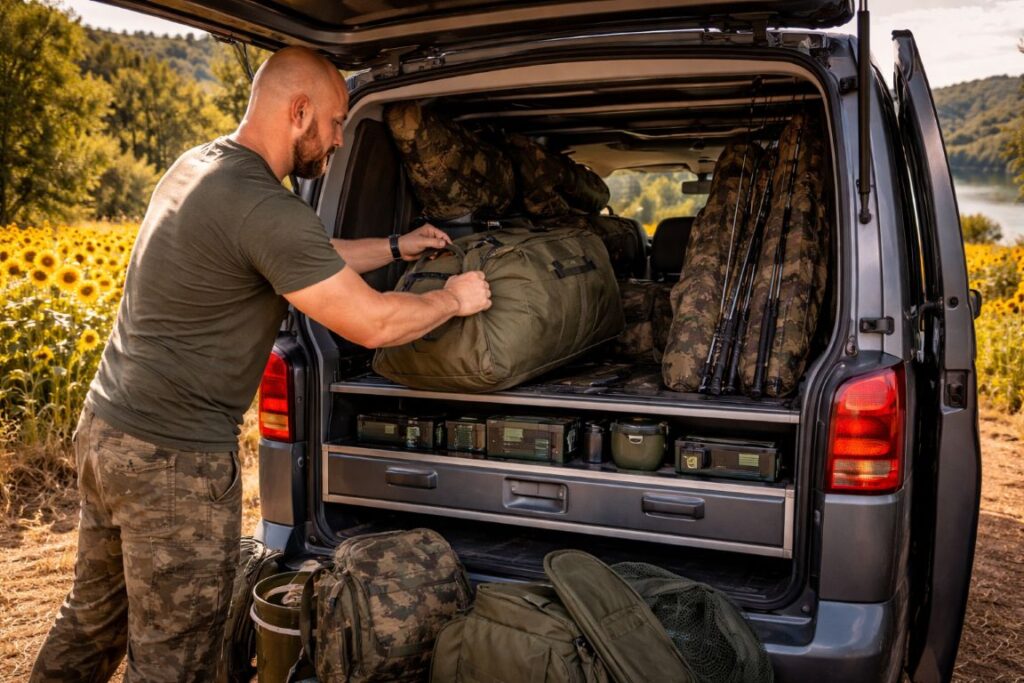
Factor in the weight and volume of your kit when planning the crossing. A fully loaded car for a week-long drive and survive trip — rods, reels, multiple rod pods or bank sticks, a full bivvy setup, bedchair, sleeping bag, cooking equipment, bait for the week, and all clothing and personal items — is a substantial load. Check your vehicle’s payload capacity and make sure your roof bars or roof box are rated for the weight you’re carrying.
Book your ferry crossing well in advance, particularly for peak summer dates. Crossings on popular routes during July and August fill up quickly, and last-minute ferry bookings can be significantly more expensive than those made months ahead.
What to pack
Packing efficiently for a drive and survive trip is a skill in itself. The temptation is to bring everything you might possibly need — the reality is that a well-organised, carefully considered kit list will serve you better than a car so full you can’t find anything when you need it.
The essentials beyond your core fishing tackle include:
- A quality bivvy with a reliable groundsheet and good ventilation for summer trips
- A bedchair and sleeping bag appropriate for the season — lightweight for summer, warmer for autumn
- A reliable cooking setup — a two-burner gas stove covers most needs
- Sufficient food for the week, including easy bank meals and plenty of snacks
- A cool box for keeping food and drinks fresh, particularly in summer heat
- Water — either sufficient bottled water or a reliable means of accessing clean water at the venue
- A comprehensive first aid kit
- Insect repellent — non-negotiable on a French lakeside in summer
- Spare batteries, a power bank, and a head torch with backup batteries
- Euros for tolls, fuel, and supermarkets en route
On arrival at the venue
Most drive and survive venues have a designated car parking area separate from the fishing swims. On an exclusive venue, your group will typically do a walk around the lake before setting up — identifying features, looking for fish, and choosing swims before anyone starts carrying gear. On a shared venue, swim allocation may be pre-assigned or first-come-first-served depending on the venue’s rules.
Check the venue’s rules carefully when you arrive, particularly around bait, night fishing, and fish care requirements. Most swimbooker Holidays venue pages detail the rules clearly, but the lake owner or bailiff may have additional guidance when you check in that’s worth knowing before you start fishing.
Drive and survive on a budget
Of all the carp fishing holiday formats available through swimbooker Holidays, drive and survive offers the most flexibility on budget. Keeping food costs down with well-planned supermarket stops en route, travelling on less popular ferry crossings, and choosing venues slightly off the beaten track rather than the most heavily marketed lakes can all make a meaningful difference to the overall cost of the trip.
The last minute availability page on swimbooker Holidays is particularly worth checking if budget is a consideration — drive and survive venues appear there regularly when cancellations open up slots at short notice, and the same quality of fishing is available at the same price regardless of when you book.
Browse drive and survive venues on swimbooker Holidays
Every drive and survive venue on swimbooker Holidays is a verified swimbooker partner with live availability and instant online booking. Browse the full range and find your next bank-based adventure.